
AFRICA-ASIA HEALTH RESEARCH TRAINING PROGRAMME

OUR PROGRAMME
OUR PROGRAMME
OUR PROGRAMME
OVERVIEW
The CREATE PhD Programme is a three-year (full-time or equivalent) PhD programme, which will train future global health research leaders who are not only technically excellent, but are equipped to work effectively across scientific and clinical disciplines in equitable partnerships with their peers in low-income countries.
The CREATE PhD Programme will provide 20 doctoral fellowships to UK professional body registered health professionals who will register for their PhD at one of the five UK Partner Institutions and conduct their research at one of six African and Asian Partner Institutions. In addition, the CREATE PhD Programme will also recruit and support an equal number of fellows based in African or Asian partner countries (Uganda, The Gambia, Pakistan, Zimbabwe, Ghana, and South Africa) to undertake a PhD. The fellows from the African/Asian countries will have the choice to register their PhD in their home country or at one of the UK partner institutions. It is generally expected that all fellows will spend at least 18 months in the African/Asian partner country undertaking their research.
UK recruited fellows will be paired with the African/Asian PhD fellow in the same country where they will be based, to create a blended south-north cohort of fellows. All CREATE PhD Programme fellows, regardless of their source of recruitment, will be able to access a large supervisory pool, training and mentorship offered by the Programme.
We welcome applications from individuals who have the scientific rigour, drive and ambition to carry out world-class research that focuses on issues of public health importance in Africa or South Asia. Academic excellence, evidence of prior productive research or other relevant experience and a vision of how the PhD will shape their career goals are essential.
We strongly encourage interdisciplinary research projects and our supervisory pool covers a range of academic disciplines and global health expertise from infectious diseases, maternal, child and adolescent health, and non-communicable diseases, neglected tropical diseases and mental health. Research does not need to be restricted to these areas but should be focused on the health needs of people in sub-Saharan Africa and South Asia.
All fellows will have one or more supervisors from the UK institution, as well as a supervisor from the African/Asian Partner Institution or a Health Education Institution (HEI) in the African/Asian partner country. All fellows will also have a mentor (matched to their health profession) to provide support and guidance for balancing their clinical and research career. Fellows will be provided with rich training opportunities aimed at equipping them to be future academic leaders and mentors, to maximise their research impact and to address the substantial inequalities in global health.
THE BENEFITS OF THIS UNIQUE PhD PROGRAMME
You will receive a highly prestigious PhD Training Fellowship, which includes:
-
Dedicated support from the Project Management Group to support the application process and to provide oversight of your PhD.
-
Outstanding global health supervisory expertise across a broad range of research themes and academic disciplines including laboratory science, bioinformatics, epidemiology, biostatistics, implementation science, social science and anthropology, development geography, health economics and health policy.
-
Access to African/Asian Partner Institutions spread across the continent in countries with different disease burdens and health systems and with exceptional research platforms providing rich research opportunities.
-
Access to relevant postgraduate training courses to promote scientifically rigorous research, and a rich programme of training and cohort activities.
-
The Digital Global Health Academy, a modular research training programme, aimed at equipping fellows to be future global health leaders
-
A centralised mentorship scheme as an additional support to the supervisory team.
-
Peer-partnering of UK and African/Asian PhD fellows, sharing knowledge, ideas and training opportunities, building a mutually supportive community of fellows.
PARTNER INSTITUTIONS
Our PhD programme will be a partnership of 5 UK Institutions and 6 Institutions across Africa and South Asia. There are strong existing partnerships between institutions, including both North-North, South-North and South-South partnerships.
The UK partnership has an excellent research and training record, having been established in 1995 as the Wellcome Trust Bloomsbury Centre for Global Health Research, which has been awarded about 90 Wellcome fellowships to date. Our African/Asian Partner Institutions (AAPIs) have robust research infrastructure and exceptional research platforms, as well as a track record for conducting high-quality research focused on addressing issues of public health importance and supporting local and international PhD students. Concentrating our partnerships on these designated institutions will ensure that there is a critical mass of fellows to enable peer support, provision of high-quality structured training and development activities and new North-South and South-South collaborations.
Additionally, three of our overseas partners are degree awarding institutions, giving our African and Asian fellows more PhD registration opportunities.
Combined, our partners will provide a vibrant and thriving research environment within which to embed PhD fellows, promoting a holistic approach to global health research.
OUR PROGRAMME
OUR PROGRAMME
UK PARTNER INSTITUTIONS
AFRICAN AND ASIAN PARTNER INSTITUTIONS


OUR PROGRAMME
OUR PROGRAMME
GOVERNANCE
PROGRAMME MANAGEMENT GROUP
The Programme Management Group (PMG) is responsible for implementing the CREATE PhD Programme objectives and for the operational oversight of the programme. The PMG is chaired by the Programme Director, Professor Rashida Ferrand, and includes co-directors from each of the partner institutions.

Prof Rashida Ferrand
Programme Director
Rashida is a physician and clinical epidemiologist, specialising in HIV and sexual health. She works across Pakistan and Zimbabwe and her research interests are adolescent health, HIV and sexual and reproductive health (SRH), and multimorbidity.


Ms Christina Albertsen
Programme Manager
Christina is the Programme manager for the initial CREATE Programme and the incoming Programme. She has over 20 years of experience managing large research grants including 6 years managing Wellcome Trust PhD Programmes.


Prof Thushan de Silva
Co-Programme Director, and mentorship lead
Thushan is an Infectious Diseases Clinician Scientist with a programme of research centred around clinical discovery science in the UK and Africa.
His group is interested in establishing how pathogens interact with human hosts at population and individual levels.


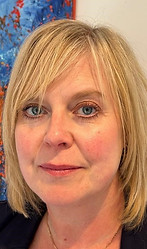
Prof Kate Ward
Programme Co-Director - Fellow training and progress oversight joint lead, and AAPI liaison joint lead
Kate is Associate Dean International (Medicine)and Professor of Global Musculoskeletal Health at the University of Southampton. She is Honorary Senior Fellow, MRC Unit The Gambia at LSHTM. Kate leads the Global Musculoskeletal Health Group in Southampton, UK and The Gambia.


Prof Parveen Ali
Programme Co-Director - Training and career transitions joint lead, and Supporting NMAHPs joint lead
Parveen is Professor of Nursing and Gender Based Violence at the School of Allied Health Professionals at the University of Sheffield. and Doncaster and Bassetlaw Teaching Hospitals NHS Foundation Trust. Her research focuses on gender-based violence, domestic abuse, inequalities in health and healthcare, and developing research capacity among nurses, midwives and allied health professionals.


Prof Celia Gregson
Programme Co-Director - Training and career transitions joint lead, and AAPI liaison joint lead
Celia is a Professor of Clinical Epidemiology and an NIHR Global Health Research Professor of Healthy Ageing in sub-Saharan Africa, leading the Global Health and Ageing Research Unit at the University of Bristol and at THRU-ZIM at BRTI.
She founded the 'Sub-saharan African MuSculOskeletal Network' (SAMSON) which aims to build musculoskeletal research capacity across the region.


Prof Katharina Kranzer
Programme Co-Director - Fellow training
and progress oversight joint lead, and Supervision joint lead
Katharina is Professor of Infectious Disease Epidemiology at LSHTM and LMU University of Munich. Based in Harare, she co-directs THRU-ZIM at BRTI.
Her work spans TB, antimicrobial resistance, and the strengthening of health and laboratory systems in high-burden settings, informed by her earlier role directing Germany's National and WHO Supranational TB Reference Laboratory. She leads the EDCTP-funded Southern African Research Capacity Network (SOFAR), co-directs the Wellcome funded initial CREATE PhD Programme, and serves on multiple WHO guideline development groups on TB screening and diagnostics.

Prof Gail Davey
Programme Co-Director - Recruitment and
EDI lead
Gail is a medical epidemiologist specialising in skin-related Neglected Tropical Diseases and her research areas are Podoconiosis, and rapid ethical assessment.
She is the founder of the International Podoconiosis Initiative, and has worked to raise the local and international profile of podoconiosis, advocating for inclusion in the WHO list of Neglected Tropical Diseases. She is also the Co-Director of the NIHR RIGHT 5-S Foundation.


Prof Maggie Donovan-Hall
Programme Co-Director - Supervision joint lead and Supporting NMAHPs join lead

Maggie is a Professor of Psychology of Prosthetics and Orthotics in the School of Health Sciences at Southampton. She has a background in Psychology and joined Southampton in 2004.
She co-founded the cross-faculty People Powered Prosthetics Research Group, which aims to improve the lives of individuals living with limb loss in both high- and low-resource settings. She also co-leads the Active Living Research Group, which develops technology and clinical practices promoting actyive living and healthy ageing.

Prof Gordon Awandare
Programme Co-Director
Gordon is the Pro Vice-Chancellor for Academic and Students Affairs at the University of Ghana. He is a Professor and Founding Director of the West African Centre for Cell Biology of Infectious Pathogens (WACCBIP) and Programme Director for the Africa Climate Collaborative at the University of Ghana.


Zahra is a Professor in the Department of Pathology and Laboratory Medicine at AKU. She is a Consultant at the Section of Molecular Pathology, Department of Pathology and Laboratory Medicine, and also Director of the Faculty of Health Sciences PhD Program. She believes that building research capacity in basic sciences is key to developing new tools in the context of host genetics and personalised medicine.
Prof Zahra Hasan
Programme Co-Director


Dr Rudo Chingono
Programme Co-Director

Rudo is a lead social scientist for the KOSHESAI Study and Global Mental Health Researcher based at THRU-ZIM in BRTI.
Her work has included research on HIV/AIDS, mental health, adolescents reproductive health, maternal and child health, antimicrobial resistance, and infectious diseases.

Dr Femke Bannink Mbazzi
Programme Co-Director
Femke is an Associate Professor at the International Centre for Evidence in Disability (ICED) at LSHTM, based in Uganda, where she heads the Disability Research Group at the MRC/UVRI & LSHTM Uganda Research Unit. She is a clinical and educational psychologist, and cultural anthropologist with over 25 years of participatory research and clinical work experience with persons with disabilities in East Africa.


Dr Ed Clarke
Programme Co-Director

Prof Shane Norris
Programme Co-Director
Shane is a Professor of Global Health at the University of Southampton, Visiting Professor at the University of the Witwatersrand in Johannesburg, and Director of the DSTI-NRF Centre of Excellence in Human Development. He is a life-course epidemiologist whose research examines how biological, social, and environmental factors from preconception through adulthood shape health and human development.

International Union Against Tuberculosis and Lung Disease
Kingston University
XXX
STRATEGIC ADVISORY BOARD
The Strategic Advisory Board (SAB) provides oversight of the programme and monitors the progress towards achieving our transformative aims. The SAB provides advice to the Programme Management Board (PMB) on the direction of the CREATE PHD Programme and contributes to its strategic development. It includes representatives from UK and African Higher Education Institutions who have led innovative and impactful training initiatives and are committed to improving equity in higher education and decolonising global health. The SAB is chaired by Dr Angela Obasi.

TBC
Chair
TBC
XXX
TBC
XXX
TBC
XXX
XXX
XXX


OUR PROGRAMME
OUR PROGRAMME
EQUALITY, DIVERSITY AND INCLUSION STATEMENT
We believe that commitment to the principles of equality, diversity and inclusion (EDI) will enhance the experience and performance of the entire CREATE PhD Programme, not just of individual fellows. We will promote EDI throughout the fellowships through careful design and monitoring of recruitment, retention, training and integration of African and UK cohorts. We expect fellows, supervisors, support staff and governance groups to undergo EDI and unconscious bias training, and to uphold the principles learned.
We will promote equality, diversity and inclusion through these measures –
Recruitment
-
Advertise beyond the ‘traditional’ channels.
-
Hold pre-application events and webinars.
-
Increase application guidance is available through the website.
-
Ensure flexible and part-time training is available.
-
Require selection and interview panellists to have undertaken annual EDI and unconscious bias training.
-
Aim for ethnic diversity and gender representation for all interview panels.
-
Analyse application and selection metrics and present to Programme Management Board and Strategic Advisory Board.
Training and Supervision
-
Require UK and African supervisors for each applicant.
-
Ensure training of all supervisors in EDI, micro aggression and supervision.
-
Support peer-pairing of African and UK fellows.
-
Ensure diversity of Digital Global Health Academy (DGHA) trainers.
-
Theme dedicated to ‘Transforming Research Culture’ and ‘Global Citizenship’ within DGHA.
-
Ensure diversity of mentor pool.
Environment
-
Identify clear pathway to reporting bullying and harassment at each institution.
-
Ensure diversity of Programme Management Group and Strategic Advisory Board.
-
Exchange ‘best practice’ across Doctoral Training Programmes.